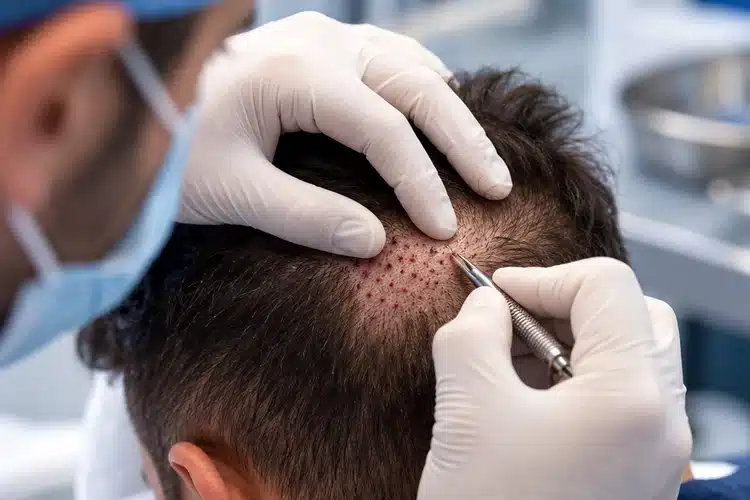
How Does a Hair Transplant Work? A Step-by-Step Guide
If you are thinking about having a hair transplant, you probably want to know exactly what happens during the procedure.
Where do the new hairs come from? How are the grafts collected? Will you need to be asleep during surgery? And how long does it take before the transplanted hair begins to grow?
These are important questions, particularly when you are considering a surgical treatment that can affect your appearance for years to come.
A hair transplant is a surgical procedure in which suitable follicular units are taken from a donor area and transplanted into areas affected by hair loss.
However, the procedure involves much more than moving hair from one part of the scalp to another.
An appropriate medical diagnosis, careful assessment of the donor area, natural hairline design, precise graft placement and a realistic long-term plan all contribute to the outcome.
The technique must also be selected according to the patient’s individual needs. A procedure that is suitable for one person may not be the best option for another.
This guide explains how a hair transplant works, from the initial consultation to the development of new hair growth, including what patients can realistically expect during recovery.
Step 1: Medical Consultation and Hair Loss Assessment
The first stage of a hair transplant takes place before surgery is scheduled.
A physician needs to determine why the patient is losing hair and whether transplantation is an appropriate treatment.
Not all types of hair loss should be treated surgically.
For example, temporary hair shedding, active inflammatory conditions and certain autoimmune forms of alopecia may require medical investigation or treatment rather than immediate transplantation.
During the initial consultation, the physician evaluates several important factors.
Identifying the Type and Extent of Hair Loss
The distribution of hair loss provides useful information about its possible cause.
Some patients experience recession at the temples or along the frontal hairline.
Others have thinning across the mid-scalp or crown.
In certain cases, hair loss affects several areas simultaneously.
The physician assesses the pattern, progression and potential stability of the condition.
This is important because hair transplantation redistributes existing follicular units; it does not stop the underlying processes responsible for future loss of non-transplanted hair.
Examining the Donor Area
The donor area is usually located at the back and sides of the scalp.
It is the region from which suitable follicular units may be collected for transplantation.
Its condition influences how many grafts can reasonably be harvested and how the remaining donor hair will look.
The assessment includes hair density, hair calibre, follicular-unit distribution and the amount of available donor reserve.
The donor area is a limited resource.
Responsible surgical planning aims to use that resource carefully, preserving the appearance of the donor region and taking potential future needs into account.
Reviewing Medical History and Expectations
The physician also considers the patient’s medical history, medications, previous procedures and other factors relevant to surgical safety.
The evaluation should include a discussion of what transplantation can realistically achieve.
A patient with limited hair loss may have different goals from someone with extensive thinning.
An appropriate treatment plan therefore begins with diagnosis and realistic expectations, rather than a predetermined number of grafts.
Step 2: Designing the Hairline and Treatment Plan
Once a patient has been assessed and considered suitable for surgery, the next stage is planning the restoration.
This is one of the most important parts of the process.
A natural-looking result depends not only on how many hairs are transplanted, but also on where they are placed and how they relate to the patient’s facial features.
How Is a New Hairline Designed?
Hairline design must take account of the proportions of the face, the patient’s age, the existing hair pattern and potential future hair loss.
An excessively low or unnaturally straight hairline may not remain aesthetically balanced as the patient gets older.
Similarly, attempting to create maximum density in every affected area may not be appropriate when the donor supply is limited.
The physician considers which areas should be prioritised and how the available grafts can be distributed.
Why Hair Direction and Angle Matter
Natural hair does not grow in exactly the same direction across the entire scalp.
Around the frontal hairline, temples and crown, the direction and angle of growth change.
The crown, for example, often contains a characteristic circular growth pattern.
During surgical planning, these natural characteristics help determine how the transplanted follicular units should be positioned.
Careful attention to the direction and angle of the hairs contributes to a more natural appearance.
Planning for Future Hair Loss
A hair transplant should not be planned only for the way a patient’s hair looks today.
Non-transplanted hair may continue to thin over time.
For this reason, the physician must consider the possibility of future progression and whether additional treatment might eventually be required.
In some cases, medical management of the underlying hair-loss condition may be discussed alongside or before surgery.
Step 3: Choosing the Hair Transplant Technique
There is no single hair transplant technique that is automatically appropriate for every patient.
The choice depends on the donor area, the extent of hair loss, the required graft plan and other individual factors.
Two established approaches to donor harvesting are Follicular Unit Extraction, commonly known as FUE, and Follicular Unit Transplantation, or FUT/Strip.
FUE Hair Transplant
With FUE, follicular units are individually extracted from the donor area using specialised small instruments.
Each unit is harvested separately.
The technique does not involve removing a continuous strip of scalp tissue, and the individual extraction sites generally heal without stitches.
However, FUE is still surgery and can leave numerous small scars in the donor area.
It is not accurate to describe it as a completely scar-free procedure.
Its suitability depends on the donor reserve, the extraction plan and the patient’s individual needs.
You can find more information about the procedure on our FUE hair transplant service page.
FUT or Strip Hair Transplant
With FUT, a strip of hair-bearing scalp tissue is surgically removed from the donor area.
The tissue is then carefully divided into individual follicular-unit grafts for transplantation.
The donor wound is closed, usually with stitches, and heals with a linear scar.
For selected patients, this approach may be considered as part of an individual surgical plan.
You can read more about FUT hair transplantation.
What About Micro-strip and Combined Techniques?
Additional approaches, including Micro-strip and combined FUE–Micro-strip procedures, may also be considered depending on the patient’s donor-area characteristics and treatment requirements.
The important point is that the choice of technique should follow the medical assessment.
It should not be made solely because one method is advertised as newer, faster or universally superior.
Although donor harvesting differs between techniques, the fundamental goal remains the same: to obtain suitable follicular units and place them carefully in the areas requiring restoration.
Step 4: Preparing for the Procedure and Local Anaesthesia
On the day of surgery, the planned treatment areas are reviewed and the scalp is prepared according to the selected technique.
Depending on the procedure, some or all of the donor area may need to be trimmed or shaved.
The treatment plan and relevant medical details are confirmed before the operation begins.
Hair transplantation is usually performed under local anaesthesia.
This means the patient is generally awake while the areas being treated are numbed.
Does a Hair Transplant Hurt?
Local anaesthesia is used to reduce pain during the procedure.
The administration of the anaesthetic may cause temporary discomfort.
Patients can also experience pressure, pulling sensations or other feelings during surgery, even when the area has been adequately numbed.
Some procedures may involve additional sedation when medically appropriate.
Individual experiences vary, so it is not possible to guarantee that every patient will experience no discomfort at all.
After surgery, the scalp may feel tender or tight, particularly in the donor and recipient areas.
The medical team should explain what to expect and how postoperative discomfort will be managed.
Step 5: Extracting Hair Grafts From the Donor Area
The next stage involves collecting follicular units from the planned donor region.
A follicular unit is a naturally occurring group of hair follicles. It may contain one or several hairs.
These units are the grafts that will eventually be transplanted.
How Are Grafts Collected With FUE?
During FUE, specialised instruments are used to separate and extract individual follicular units from the donor area.
The extraction pattern must be carefully planned.
Removing an excessive number of units from a limited region can reduce the appearance of density in the donor area.
The goal is therefore not simply to collect the highest possible number of grafts.
It is to obtain an appropriate number while respecting the available donor reserve.
Why Graft Handling Is Important
Follicular units are delicate biological structures.
They must be handled carefully to minimise unnecessary trauma.
The extraction process, the instruments used and the experience of the surgical team can all influence graft quality.
Poor handling can damage grafts and compromise their potential to produce hair after transplantation.
This is why the procedure requires careful technique and coordinated medical support.
Step 6: Preparing and Preserving the Follicular Units
Once extracted, the grafts are assessed and prepared for transplantation.
Depending on the harvesting technique and clinical protocol, this stage may involve examining, separating and organising the follicular units.
The grafts are preserved under appropriate conditions until they are ready for implantation.
Their preparation is not merely an administrative part of the procedure.
It contributes to the preservation of the delicate structures needed for subsequent hair growth.
Why Different Grafts May Be Used in Different Areas
Not every follicular unit contains the same number of hairs.
The physician takes this into account when planning the recipient area.
For example, finer-looking single-hair units may be especially useful when creating a natural transition along the frontal hairline.
Units containing more hairs may be considered for appropriate areas behind the hairline, depending on the individual design and available grafts.
The exact distribution is determined by the surgical plan.
A natural result depends on careful selection and placement, not simply on increasing the graft count.
Step 7: Creating Recipient Sites and Implanting the Grafts
After the grafts have been prepared, the next stage is their placement into the areas affected by hair loss.
This is where the surgical plan becomes visible.
The physician determines how the grafts should be positioned to achieve appropriate coverage and a natural growth pattern.
Depending on the method used, tiny recipient sites are created and follicular units are placed into them using specialised instruments.
What Determines the Direction of New Hair?
The angle and direction of each graft are important.
Hairline hairs generally require a different orientation from hairs in the crown.
A graft placed at an inappropriate angle may grow in a direction that does not blend naturally with the surrounding hair.
Careful site planning also helps manage density and the distribution of available follicular units.
The objective is to create a balanced appearance while taking the patient’s existing hair and possible future loss into account.
Does More Density Always Mean a Better Result?
No.
Attempting to place an unnecessarily high number of grafts is not always appropriate.
The available donor supply, the characteristics of the recipient area and the expected final coverage all need to be considered.
A well-designed procedure focuses on realistic improvement and the long-term use of donor hair rather than an arbitrary density target.
At Hairtransplant Clinic, Dr. Ioannis Papangelopoulos, MD, PhD, personally performs hair transplant procedures, supported by his medical team.
His direct involvement and individual surgical planning are central features of the clinic’s approach to doctor-led hair transplantation in Greece.
How Long Does a Hair Transplant Take?
The time required depends on the number of grafts, the technique and the overall complexity of the procedure.
The Greek clinical guide describes a typical duration of approximately five to eight hours for many procedures.
However, this is an indicative range rather than a fixed schedule for every patient.
A smaller procedure may take less time, while extensive restoration may require a longer session or more than one treatment day.
Hair transplantation is commonly performed as an outpatient procedure, meaning an overnight hospital stay is not usually required.
The medical team should explain the expected duration and any specific preparation required before surgery.
What Happens Immediately After a Hair Transplant?
Once the procedure is complete, the donor and recipient areas begin to heal.
Patients receive instructions about scalp care, washing, medication where appropriate, physical activity and protecting the grafts.
During the first few days, some degree of redness, tenderness, swelling or scab formation may occur.
The extent varies between patients.
The scalp should not be subjected to unnecessary rubbing, scratching or pressure.
The exact care instructions depend on the technique used and the patient’s healing process.
Why the First Two Weeks Matter
The transplanted grafts need protection during the early healing period.
The recipient area should be treated gently and in accordance with the surgeon’s instructions.
Patients should not assume that ordinary hair-care routines can be resumed immediately after surgery.
Washing, sleeping position, exercise, hats and styling products may all require temporary adjustments.
The instructions provided by the treating physician take priority over general advice found online.
When Can You Return to Work?
The answer depends on the type of work, the extent of surgery and the patient’s recovery.
Someone working from home may be able to resume certain activities earlier than a person whose job involves heavy physical exertion or exposure to environments that could affect the healing scalp.
Some patients may return relatively quickly, while others may prefer or need approximately one to two weeks away from work.
The appropriate timing should be discussed with the medical team.
Do Transplanted Hairs Fall Out After Surgery?
One of the most common concerns is the appearance of shedding during the first weeks after transplantation.
This can be surprising, particularly for someone who expects the transplanted hairs to begin growing immediately.
However, temporary shedding of the visible transplanted hair shafts is common during the early postoperative period.
This does not automatically mean that the transplanted follicular units have been lost.
The follicles may remain in the scalp and later begin producing new visible hairs.
The term shock loss is also used in hair transplantation, although it can refer more broadly to temporary shedding of transplanted or existing hairs following surgery.
These processes should not be treated as identical in every case.
Does Shedding Mean the Transplant Has Failed?
Not necessarily.
Temporary shedding can be part of the expected postoperative course.
However, the presence or absence of shedding alone cannot confirm graft survival or predict the final result.
If there is unusual bleeding, significant pain, signs of infection or another concerning change, patients should contact their surgical team for advice.
When Does New Hair Start Growing?
Hair transplant results develop gradually.
The first weeks are primarily about healing and the early changes in the transplanted hairs.
After temporary shedding, newly visible growth usually takes time to appear.
A general recovery and growth timeline may look like this:
The First Few Weeks: Healing and Early Shedding
During the early period, the scalp heals and postoperative redness or scabs gradually improve.
Some transplanted hair shafts may shed.
The appearance at this stage does not represent the final outcome.
Months 3–5: Early New Growth
For many patients, new hair growth begins to become noticeable around the third to fifth month.
At first, the emerging hairs may be fine or relatively short.
Coverage can still look uneven.
This is usually too early to judge the final density.
Months 6–9: Increasing Visible Coverage
As more hairs become visible and gain length, the transplanted area may begin to look fuller.
The pace of improvement varies.
Some regions may develop earlier than others.
Months 10–18: Further Maturation
Hair growth and the overall appearance may continue to develop for many months.
The crown, in particular, may take longer to reach its more mature appearance in some patients.
A final assessment is therefore often made considerably later than the early postoperative period.
These timeframes are indicative rather than a guarantee of a specific result.
Healing, graft growth and individual biological differences all influence the outcome.
Will the Hair Transplant Look Natural?
A natural-looking result depends on several factors working together.
The surgeon must consider the shape and position of the hairline, the direction of hair growth, graft selection and distribution, the patient’s facial features and existing hair characteristics.
The available donor supply also limits what can reasonably be achieved.
A patient with extensive hair loss may not be able to achieve the same density as someone with a relatively small area requiring restoration.
This is why realistic expectations are an essential part of planning.
A suitable treatment aims to achieve a balanced appearance appropriate to the individual patient rather than reproducing an unrealistic density target.
To explore examples of surgical outcomes, you can view the clinic’s hair transplant before-and-after results.
Individual results vary and photographs should not be interpreted as a guarantee of what another patient will achieve.
Are Hair Transplant Results Permanent?
Transplanted follicles are generally selected from donor areas with greater resistance to the typical pattern of androgenetic hair loss.
Many transplanted hairs can therefore provide long-lasting growth.
However, this does not mean that every transplanted hair is guaranteed to survive indefinitely.
It also does not mean that the patient’s remaining natural hair will stop thinning.
Hair loss can continue in non-transplanted areas, potentially changing the overall appearance over time.
The original surgical plan should take this possibility into account.
Some patients may need ongoing medical management or further assessment as their hair-loss pattern evolves.
Who Is a Suitable Candidate for Hair Transplantation?
Hair transplantation can be considered for appropriately selected patients with suitable donor hair and a diagnosis that supports surgical restoration.
However, not everyone experiencing hair loss is a candidate.
The physician needs to assess:
- The underlying cause and pattern of hair loss.
- Whether the condition is stable or continuing to progress.
- The quality and availability of donor follicular units.
- General health and relevant medical factors.
- Previous treatments and procedures.
- The patient’s expectations and long-term restoration goals.
In some situations, further investigation or non-surgical treatment may be recommended before considering transplantation.
The purpose of the assessment is not simply to decide how many grafts to transplant.
It is to determine whether surgery is appropriate and whether the proposed result is realistic.
What Are the Risks of a Hair Transplant?
Hair transplantation is a surgical procedure, so it carries potential risks as well as possible benefits.
Common temporary effects can include redness, swelling, tenderness, scabs and changes in scalp sensation.
Other complications, although less common, may include infection, bleeding, visible scarring, prolonged discomfort or unsatisfactory growth.
FUE and FUT have different donor-area scarring patterns, but neither procedure is entirely scar-free.
The risks and expected recovery should be discussed with the physician before a patient agrees to surgery.
An individual consultation also provides the opportunity to ask about the technique, the surgeon’s experience and the plan for postoperative follow-up.
Frequently Asked Questions About the Hair Transplant Procedure
How does a hair transplant work?
A hair transplant involves collecting suitable follicular units from a donor area, preparing the grafts and implanting them into areas affected by hair loss. The procedure requires medical assessment, hairline design, careful graft placement and postoperative care.
Is a hair transplant performed under general anaesthesia?
Usually not. Hair transplantation is generally performed under local anaesthesia, with sedation considered in selected cases. The anaesthetic plan depends on the procedure and the patient’s medical needs.
How many hours does a hair transplant take?
The duration depends on the number of grafts, the harvesting technique and the surgical plan. Many procedures may take approximately five to eight hours, while larger cases can take longer or require additional sessions.
Is FUE a scar-free hair transplant technique?
No. FUE avoids the long linear donor scar associated with strip harvesting, but the individual extraction sites can leave numerous small scars.
Does the surgeon personally perform the procedure?
This depends on the clinic and its surgical practices. Patients should clarify who performs the important surgical stages before agreeing to treatment. At Hairtransplant Clinic, Dr. Ioannis Papangelopoulos personally performs hair transplant procedures with the support of his medical team.
When can I wash my hair after transplantation?
The timing and method depend on the surgical technique and healing process. Patients should follow their surgeon’s specific washing instructions and avoid rubbing or disturbing the recently treated areas.
Is it normal for transplanted hair to fall out?
Temporary shedding of visible transplanted hairs is common during the early weeks. It does not necessarily mean the follicular units have failed, but the final outcome cannot be judged from shedding alone.
When will I see the final hair transplant result?
Early new growth often becomes visible from approximately three to five months. Hair growth and maturation continue over time, with final assessment often taking around 10–18 months depending on the patient and treatment area.
Can I return to exercise immediately?
Strenuous exercise is generally restricted during the early recovery period. The appropriate return to physical activity depends on healing, the procedure and the surgeon’s instructions.
Will a hair transplant stop future hair loss?
No. Transplantation redistributes suitable follicular units but does not automatically prevent the remaining natural hair from thinning. Long-term planning and, in selected cases, medical management may still be necessary.
Do all patients need the same number of grafts?
No. Graft requirements depend on the extent of hair loss, donor-area characteristics, the desired coverage and the long-term surgical plan. There is no universal number appropriate for every patient.
How do I know whether I need a hair transplant?
The decision should follow a medical diagnosis and an assessment of your donor area, hair-loss pattern, health and expectations. Surgery may not be appropriate for temporary shedding or certain active scalp conditions.
Conclusion: A Successful Plan Begins Before Surgery
Understanding how a hair transplant works can help you make a better-informed decision about hair restoration.
The process begins with a medical assessment, not with graft extraction.
The physician must determine the cause of hair loss, evaluate the donor area and design a treatment plan that fits the patient’s needs.
Only then should the appropriate technique be selected.
The extraction, preparation and implantation of follicular units require precision, careful handling and attention to the natural direction of hair growth.
Recovery is equally important. Healing takes time, temporary shedding may occur and visible hair growth develops gradually over the following months.
The goal of a hair transplant is not simply to move the greatest possible number of grafts. It is to achieve a medically appropriate, natural-looking restoration while using the donor area responsibly.
At Hairtransplant Clinic, Dr. Ioannis Papangelopoulos, MD, PhD, personally performs hair transplant procedures, supported by his medical team.
If you are considering hair transplantation in Greece and would like to understand whether you are a suitable candidate, you can contact Hairtransplant Clinic to arrange an individual diagnostic consultation.
Phone: +30 21 0775 7700
Email: info@hairtransplant.gr
A personalised assessment is the first step towards understanding your treatment options and what may realistically be achieved.